When inflight WiFi first appeared, it felt like a gimmick: a way to check email at 35,000 feet if you were lucky, patient, and willing to pay a premium. Two decades later, connectivity has quietly shifted from “nice to have” to a core part of the airline product, to the point where some carriers are rebuilding loyalty, branding, and even their network partnerships around it.
And now, with Starlink and other lowEarthorbit (LEO) networks coming on board, we are entering a phase where WiFi is not just faster, but strategically central to how airlines differentiate and monetize.
How onboard WiFi started
The modern story of inflight internet begins with Boeing’s “Connexion by Boeing” program in the early 2000s. Lufthansa became the inaugural commercial customer, launching a threemonth Connexion trial on a Frankfurt–Washington Boeing 747 service in early 2003 and then rolling it out more widely as “FlyNet” across roughly 80 longrange aircraft. Other early adopters like SAS, Japan Airlines and China Airlines followed, offering broadband via satellite antennas and cabin WiFi routers long before most passengers expected to be online in the air.
From rare perk to standard feature
By the mid2010s, inflight WiFi had moved from experiment to expectation, while nowadays it’s considered more or less a standard feature. Recent reports suggest that about 90% of legacy airlines are now equipped with some form of onboard WiFi, while about 60% of lowcost carriers still have no connectivity at all, underscoring a strategic divide between “productled” and “pure price” business models.
What kind of WiFi are we actually getting?
Under the hood, most current systems fall into a few buckets: airtoground networks (historically common in North America) and satellitebased systems. Typical aggregate speeds per aircraft on today’s satellite solutions sit roughly in the 10-70 Mbps range, good enough for email, web browsing and some streaming, but still a compromise compared with ground networks. Most airlines offer a freemium approach (basic free tier plus paid upgrades), which is now the leading model globally, while fully free WiFi is still offered by less than a fifth of connected airlines.
Why airlines care so much about inflight Wi-Fi
From the passenger side, WiFi has quietly become a driver of both satisfaction and repurchase. Inflight connectivity surveys found that the majority of passengers describe good inflight WiFi as essential to their travel experience, not just a bonus, and roughly twothirds say they are more likely to rebook with an airline that offers highquality connectivity. Among business travelers and younger passengers, the numbers are even higher, with around threequarters of business travelers rating inflight WiFi as critical and a large majority saying they would use it whenever available.
In other words, connectivity has shifted from an ancillary revenue line item to a factor that can influence route choice, loyalty program behavior, and brand perception.
Enter the LEO revolution
Against that backdrop, it is not surprising that airlines are now looking to LEO (low-Earth-orbit) satellite networks like Starlink and Amazon’s Leo service as the next step in performance. LEO constellations operate much closer to Earth than traditional geostationary satellites, which cuts latency dramatically and allows much higher throughput per aircraft, enabling true multidevice streaming and more consistent performance across the cabin.
Airlines are using or planning LEO Wi-Fi connectivity, with many positioning it as free for at least their loyalty members, viewing WiFi as an investment in customer experience and brand differentiation rather than a standalone revenue stream.
Amazon Leo, the branding angle, and incremental value added
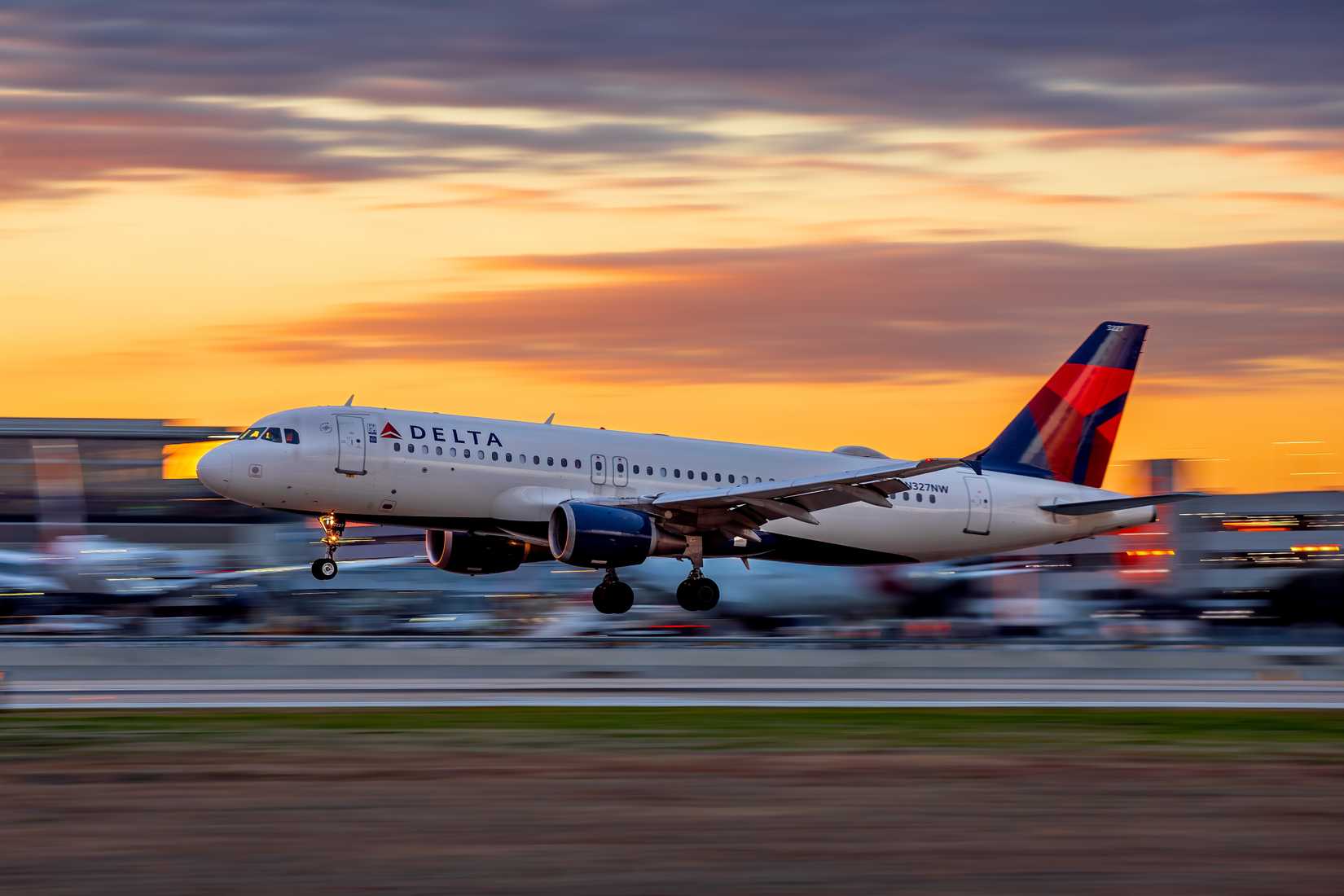
While Starlink Aviation has signed a growing list of airline partners (around 35 major airlines have committed to rolling out Starlink), it is not the only LEO game in town, and the case with Delta shows that commercial strategy matters as much as raw bandwidth. Delta Air Lines has chosen to partner with Amazon’s Leo satellite network (part of the broader Project Kuiper ecosystem) rather than Starlink, despite having previously tested Starlink hardware.
Reporting from Simple Flying suggests a key reason was branding and control of the digital experience. Delta wanted passengers to experience highspeed connectivity through its own “Delta Sync” portal and digital ecosystem, rather than logging in via a Starlinkbranded interface as most competitors do. The airline ultimately opted for Amazon Leo, which not only offers download speeds of up to 1 Gbps but also the ability to stream Amazon Studios content within the in-flight entertainment system.
In parallel, American Airlines has publicly explored pairing either Starlink or Amazon Leo with onboard delivery of Amazon Prime content, underlining how connectivity, entertainment and bigtech partnerships are converging.
Why airlines are investing beyond the bandwidth
When you combine these moves, a pattern emerges. Airlines are not just chasing faster WiFi because passengers like speed tests; they are building:
Deeper engagement with highvalue customers, especially business travelers who see connectivity as a prerequisite for productivity and are more likely to choose or rebook carriers that meet that expectation.
New ancillary and partnership revenue, whether through tiered paid plans, sponsored access, or bundling WiFi into cobranded credit cards, subscriptions, or loyalty tiers.
Stronger product differentiation and brand stories, such as positioning “free, fast WiFi for everyone” as a signature promise, or integrating streaming platforms and personalized portals into the onboard experience.
Air travel is no longer just A to B
The majority of lowcost carriers still fly with no WiFi at all. For fullservice carriers, though, the direction is clear - as WiFi becomes faster, cheaper and more tightly integrated with loyalty and content ecosystems, it will keep moving from optional extra to core product attribute.
Price will always matter, but it no longer singlehandedly determines customer choice on many routes. When a traveler decides between several offers, especially in premium cabins or on longhaul flights, they are increasingly comparing the whole package - seat, service, schedule, loyalty benefits, and now, the quality of the connection and digital experience on board.
In that world, inflight WiFi is one of the ways airlines signal what kind of product they want to be.