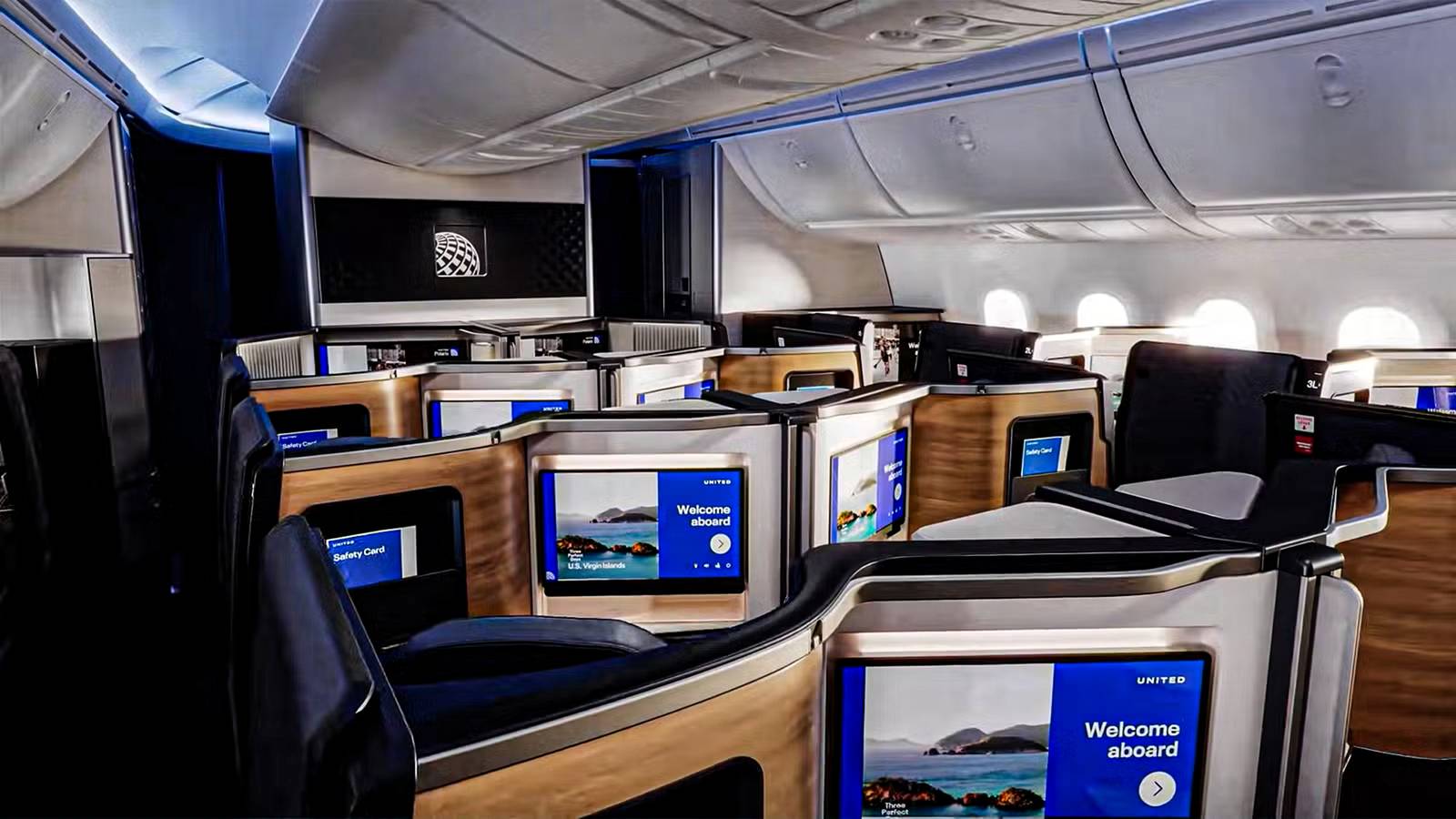
For years, long-haul business class meant a simple mental model: a lie-flat seat, lounge access, higher checked baggage allowance, advance seat selection, priority services, and flexibility. That model is over.
More airlines are now carving business class into branded fare families that look increasingly familiar to anyone who watched economy unbundle over the last decade. Air France/KLM, Finnair and Lufthansa introduced Business Light, Emirates has Business Special, Etihad now sells Business Value, ZIPAIR has built an ultra-stripped premium proposition around a flat bed with many extras sold separately, and now United is introducing Basic Polaris
The pattern is consistent even when the branding differs. Airlines keep the headline product - the seat and onboard cabin experience - while steadily removing elements that used to be assumed: lounge access, advance seat selection, extra baggage, refunds, flexible changes, and sometimes even priority handling.
That matters because “business class” no longer tells you enough to know what you are buying. Increasingly, it only tells you where you will sit.
Business Class, Unbundled
United’s new Basic Polaris is one of the clearest signals that this is no niche experiment. Reporting indicates that the onboard Polaris experience remains intact, but the fare strips out elements such as advance seat selection and Polaris lounge access, while preserving the premium seat itself.
The logic is easy to understand from the airline side. Premium demand is strong, but not every customer values every perk equally. A traveler may want the bed and privacy, but not the lounge. Another may care about flexibility, but not checked baggage. Unbundling lets airlines segment demand more precisely and price the same cabin in more ways.
But this also pushes complexity back onto the traveler and the seller. Once “Business” stops implying a standard bundle, each fare family becomes its own product definition. The problem is no longer just finding a flight at the right price. It is finding the right product attributes before price even becomes meaningful.
The Assumptions No Longer Hold
The dangerous part is not that perks are being removed. It is that the old assumptions still feel natural.
A traveler can still reasonably assume that business class includes checked baggage, lounge access, and free seat assignment. Yet that assumption now fails often enough to create real friction in shopping, policy compliance, traveler satisfaction, and conversion. Etihad Business Value removes lounge access and included seat selection, Lufthansa Business Light pares back baggage and flexibility, and Emirates Special has already normalized reduced ground benefits in premium cabins.
This is exactly what happened in economy, where fare families multiplied and the cabin label stopped carrying enough information on its own. Basic, standard, flex, light, classic, plus, smart - each brand bundles a different set of attributes, and each airline defines them differently. Business class is now moving down the same path.
The difference is that the stakes are higher. The premium traveler is not only buying transportation, but also comfort, control, time savings, and reduced uncertainty. When those attributes become harder to detect, the shopping problem becomes materially more complex.
Why Discovery Now Matters Even More
As premium products fragment, “business class” now comes in multiple versions, each with different attributes by airline, route, and fare family. That makes it harder to shop by cabin alone. Travelers increasingly need to think in needs instead: lie-flat seat, direct aisle access, lounge, flexibility, or simply the best value for a specific trip context.
In that sense, airlines themselves are shifting the market from price-first comparison to product-first matching.
The Real Shift
The real story is not just that airlines are removing perks. It is that business class is no longer a single product category in any useful retail sense.
It is becoming a family of differentiated products with overlapping cabin access and diverging attributes. That makes product definition more important, traveler intent more valuable, and discovery much more than a search problem.
The era of the all-inclusive long-haul business-class ticket is ending. What replaces it will reward the sellers and platforms that can understand not just where travelers want to go, but what they actually need.